

OSRS F2P Melee Training Guide: Best Methods from Level 1 to 99
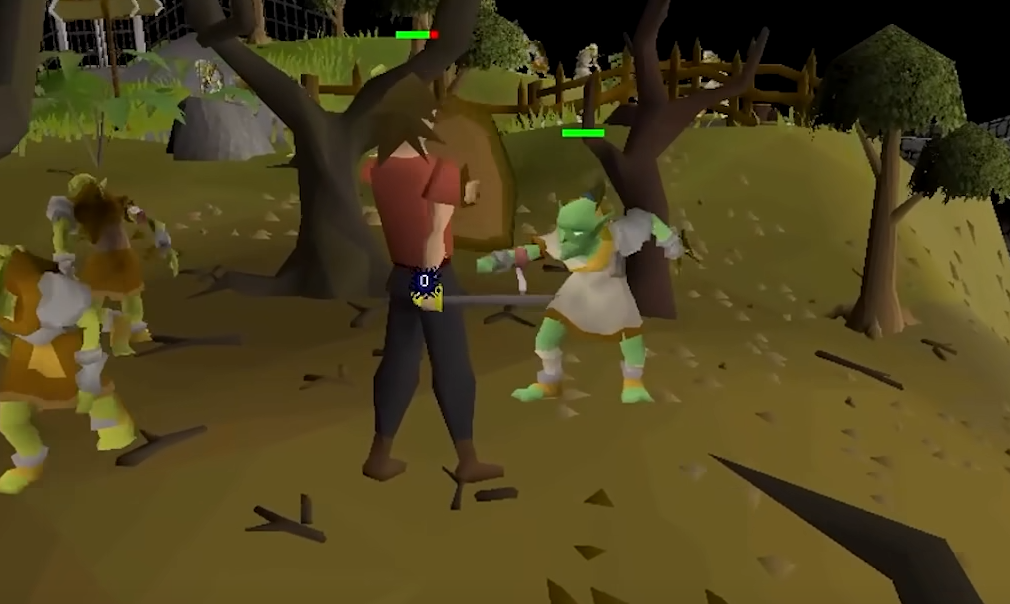
Free-to-play melee training in Old School RuneScape is not complicated because there are hundreds of viable weapons or training areas. It is complicated because the available choices are limited, which makes small decisions more important.
Reaching the next scimitar requirement, gaining a new maximum hit, choosing the right amulet, obtaining a Mooleta, and knowing when to leave a profitable monster for a faster one can noticeably change the length of the grind.
This guide explains what F2P players should actually do at each stage, how to set up the most useful training methods, and when it makes sense to move on. It covers regular accounts, Ironmen, active training, AFK training, and methods that combine melee experience with Prayer or profit.
Players building their first account can also use the MMOWire OSRS hub and our OSRS beginner guide alongside this page.
OSRS F2P Melee Training Guide Index
Jump directly to the section you need:
What Most F2P Players Should Do
The most practical F2P route is to progress through scimitars until 40 Attack, obtain a rune scimitar, complete The Ides of Milk, and use Brutus when you want active experience. Flesh Crawlers and giant spiders provide the main low-attention alternatives.
| Account Stage | Recommended Method | Main Objective |
|---|---|---|
| Levels 1-10 | Monks, cows, chickens, or men and women | Reach steel and black weapons without spending much on food |
| Levels 10-20 | Monks, giant rats, minotaurs, or big frogs | Reach mithril weapons and build enough Hitpoints for stronger targets |
| Levels 20-40 | Brutus, giant frogs, or barbarians | Reach 40 Attack for a rune weapon |
| Levels 40-60 | Brutus, Flesh Crawlers, or Body Golems | Build Strength while using a rune scimitar or Barronite mace |
| Levels 60-99 | Brutus for active XP or giant spiders for AFK training | Choose between higher attention and long uninterrupted sessions |
This does not mean every account must follow the same exact monsters. A player who wants money may spend more time at Hill Giants or Ogresses, while an Ironman may prioritize the Ruins of Camdozaal to obtain a Barronite mace.
The important milestones are more consistent than the monsters: reach 40 Attack, acquire a strong four-tick weapon, improve your maximum hit, and stop wearing defensive equipment when the target is barely damaging you.
Should You Train Attack, Strength, or Defence First?
Attack should be trained when it unlocks a better weapon. Strength should be trained when you already have the best weapon available for your current Attack level. Defence should normally come after those two unless you are using too much food or need a specific armour requirement.
A practical progression is:
- Raise Attack to 10 for black weapons.
- Train Strength before moving toward 20 Attack.
- Reach 20 Attack for mithril weapons.
- Raise Strength again.
- Reach 30 Attack for adamant weapons.
- Build Strength before pushing to 40 Attack.
- At 40 Attack, equip a rune scimitar or another suitable rune-tier weapon.
- Prioritize Strength until additional accuracy or Defence becomes necessary.
Do not interpret this as a requirement to leave Defence at level 1. A regular account benefits from enough Defence to wear the armour available at 20, 30, and 40. The point is that additional Strength usually improves training speed more than additional Defence once you can survive comfortably.
| Situation | Recommended Priority |
|---|---|
| Your next scimitar requires a few Attack levels | Train Attack until the weapon is unlocked |
| You already have the best weapon for your Attack level | Train Strength |
| You are missing frequently against a tougher target | Increase Attack or move to a lower-Defence monster |
| You are using excessive food | Increase Defence, improve armour, or choose a weaker target |
| You are training at harmless low-Defence monsters | Prioritize Strength and offensive equipment |
Why Maximum-Hit Breakpoints Matter in F2P
Strength levels do not increase your maximum hit after every level. Several Strength levels may pass before your weapon gains another point of damage.
This creates an important F2P equipment decision between the amulet of Strength and amulet of power.
The amulet of Strength provides more Melee Strength. The amulet of power provides less Strength but offers accuracy and defensive bonuses. If the amulet of Strength raises your maximum hit, it is normally the stronger training option against low-Defence monsters. If both amulets produce the same maximum hit, the amulet of power can be better because its extra accuracy may improve damage more consistently.
Practical rule: Recheck your maximum hit whenever you gain several Strength levels, change weapons, obtain a Mooleta, use a stronger Strength prayer, or drink a Strength potion. The best amulet can change even when the rest of your equipment remains the same.
The Mooleta's +1 Strength bonus works the same way. Sometimes it creates a new maximum hit immediately. At other levels, it provides offensive accuracy without changing the largest number you can hit. It remains the strongest offensive F2P shield-slot choice, but the exact size of the improvement changes with your setup.
F2P Melee Weapon Progression
Scimitars are the standard F2P training weapons because they combine a four-tick attack speed with useful Strength and accuracy bonuses. A slower sword may show larger individual hits but still deal less damage over a full minute.
| Attack Level | Recommended Weapon | What to Do |
|---|---|---|
| 1 | Iron scimitar | Use immediately or continue with the best starter weapon available |
| 5 | Steel scimitar | Upgrade if it is easy to obtain |
| 10 | Black scimitar | Use when available, but do not overpay for a brief upgrade |
| 20 | Mithril scimitar | Use while building Strength and working toward 30 Attack |
| 30 | Adamant scimitar | Strong bridge to the final F2P weapon tier |
| 40 | Rune scimitar | Best general-purpose F2P melee training weapon |
| 40 | Barronite mace | Excellent Ironman option and best choice against Camdozaal golems |
Rune Scimitar
The rune scimitar is the default level-40 training weapon for regular F2P accounts. It is fast, affordable through player trading, and effective against the low-Defence enemies used for most training.
Once you have a rune scimitar, additional Attack levels do not unlock another normal F2P scimitar. That makes Strength the natural priority for most of the remaining grind.
Barronite Mace
The Barronite mace requires 40 Attack and completion of Below Ice Mountain. It is slower to obtain than buying a rune scimitar but is particularly important for F2P Ironmen.
Its golembane effect makes it the correct weapon against Body Golems and other golems in the Ruins of Camdozaal. Against ordinary enemies, the rune scimitar generally remains the stronger all-purpose choice.
Rune Sword
The rune sword is a useful fallback for Ironmen who can access the Champions' Guild but have not obtained a Barronite mace or reached the extremely high Smithing requirement for a rune scimitar.
It is not as strong as the rune scimitar for general training, but its fast attack speed keeps it ahead of slower options such as the rune longsword in many low-Defence situations.
Do Not Use Slow Weapons Just Because They Hit Harder
Rune longswords, battleaxes, and two-handed swords have uses in PvP and specific combat situations, but they are usually weaker for sustained training. Missing an attack with a slow weapon also costs more time before the next hit.
For ordinary melee XP, stay with a four-tick weapon unless the target has a specific weakness or you are deliberately using a finishing weapon in PvP.
F2P Melee Gear That Is Actually Worth Obtaining
F2P has very few offensive armour upgrades. Most of your damage comes from the weapon, neck slot, shield slot, Strength level, prayers, and temporary boosts.
Mooleta
Mooleta is an untradeable off-hand dropped by Brutus after completing The Ides of Milk. It has no wielding requirement and provides +1 Melee Strength along with offensive Stab, Slash, and Crush bonuses.
It is the only F2P shield-slot item with offensive melee bonuses. That makes it one of the most meaningful equipment upgrades available to a free player.
Use Mooleta when maximizing damage. Use a rune kiteshield when survival matters more than a small offensive improvement, such as during a difficult trip where banking is inconvenient.
Amulet of Strength or Amulet of Power
Use an amulet of Strength when its larger Strength bonus adds a maximum hit. Use an amulet of power when both amulets have the same maximum hit and the additional accuracy is more useful.
The amulet of accuracy from Imp Catcher is a reasonable starter item, but it should eventually be replaced.
Rune Armour
Rune armour requires 40 Defence. A rune platebody also requires Dragon Slayer I, while the rune chainbody does not.
Platebodies are stronger against Stab and Slash. Chainbodies offer better Crush Defence and can be preferable against monsters using Crush attacks. Do not automatically assume the platebody is best against every enemy.
Stronghold of Security Boots
Fancy boots and fighting boots are free, easy to reclaim, and good enough for nearly every F2P training session.
Gold decorative boots provide +1 Strength, but earning the required Castle Wars tickets takes far too long to justify them solely as a melee training upgrade. Obtain them for completion or personal goals, not because they are necessary for level 99.
Gloves and Vambraces
F2P gloves do not provide a meaningful Strength progression comparable to members equipment. Use leather gloves, leather vambraces, or green d'hide vambraces based on the defensive bonuses you need.
Gilded d'hide vambraces are expensive and unnecessary for routine melee training. Their status as a technical best-in-slot defensive item does not make them an efficient purchase.
Strength Potions and Prayers
Strength potions are worth using during serious training sessions. They can increase your maximum hit and accelerate the entire session for a relatively small cost.
Offensive prayers are also valuable, but constant prayer use is difficult to sustain in F2P. Use them where an altar or Prayer-restoring mechanic is accessible, during Brutus kills where every shortened fight matters, or when attempting a more dangerous target.
Levels 1-20: Reach Mithril Weapons Quickly
The first 20 levels should be short. Do not spend several hours optimizing a monster you will outgrow almost immediately.
Monks
Monks at the Edgeville Monastery are one of the easiest early choices because they can heal the player for free. They have more Hitpoints than chickens and work especially well for accounts with little or no Defence.
The drawback is that they provide no useful drops beyond bones and must be attacked manually.
Cows
Cows are useful when a new account also needs starting money or Crafting materials. Bank the cowhides and cook the raw beef when additional food is needed.
The experience is not exceptional, but the combination of combat, Cooking, and early money makes cows more useful than their low level suggests.
Chickens
Chickens require no food and drop stackable feathers. They become poor training targets as soon as your maximum hit begins wasting a large portion of their three Hitpoints.
Move on once you can regularly hit 3 or 4. Remaining longer means spending more time changing targets than dealing damage.
Giant Rats and Minotaurs
Giant rats offer slightly larger health pools and drop raw rat meat that can be cooked. Minotaurs in the Stronghold of Security provide iron arrows and other small supplies, making them more attractive for an account that will train Ranged later.
Recommended Approach
Train Attack to your next weapon requirement, raise Strength between upgrades, and keep Defence high enough to wear the armour you already own. There is no reason to remain at these monsters after approximately level 20 melee stats unless you need their specific drops.
Levels 20-40: Brutus, Giant Frogs, or Barbarians
The goal of this stage is reaching 40 Attack without leaving Strength far behind. A player rushing 40 Attack with extremely low Strength may equip a rune scimitar but still deal underwhelming damage.
Brutus
Brutus becomes available after completing The Ides of Milk and is the strongest active option for many F2P accounts because he awards double normal combat experience per point of damage.
The boss requires movement and attention, so players learning the mechanics may initially perform worse than they would against ordinary monsters. Once the fight becomes comfortable and the Cowbell amulet is used correctly, Brutus can carry the account through this entire level range.
Giant Frogs
Giant frogs in Lumbridge Swamp have 23 Hitpoints, low Defence, and guaranteed big-bone drops. They are a good alternative for players who want straightforward combat and some Prayer progress without fighting a boss.
Big frogs have slightly less health but more available spawns. They can be better when the giant frogs are crowded.
Barbarians
Barbarians in Barbarian Village have reasonable Hitpoints for their level and are close to food, fishing spots, and banking options. Their drops are not valuable, but the location is convenient for a developing account.
When to Move On
Move into the next stage when you have 40 Attack and a rune-tier weapon. At that point, monster selection should be based less on your level and more on whether you want active XP, AFK time, drops, or Ironman resources.
Levels 40-60: Choose Active, AFK, or Resource Training
This is where F2P melee training divides into clear paths.
| Goal | Recommended Method | Reason |
|---|---|---|
| Active experience | Brutus | Double combat XP multiplier and no competition |
| Low-attention training | Flesh Crawlers | Automatic aggression and low maximum damage |
| Ironman progression | Body Golems | Barronite mace effectiveness and useful resource drops |
| Experience with Prayer | Giant Frogs or Hill Giants | Guaranteed big bones |
| Experience with modest profit | Hill Giants | Limpwurt roots, runes, gems, and giant keys |
Flesh Crawlers
Flesh Crawlers on the second level of the Stronghold of Security remain aggressive against players of every combat level. They only hit for one damage, although their fast attack speed can still consume food over a long session.
They are an excellent low-attention option because there is little movement between targets. Their F2P drops are poor, and they do not provide bones for Prayer.
Body Golems
Body Golems in the Ruins of Camdozaal have 60 Hitpoints and are best fought with a Barronite mace. The golembane effect gives the mace a specific advantage that the rune scimitar does not receive.
Body Golems can drop ores, clay, gems, rune essence, and body cores. This makes them especially useful for Ironmen who value account resources more than maximum melee experience.
Hill Giants
Hill Giants are slower than dedicated training monsters but provide big bones, limpwurt roots, runes, gems, and giant keys for Obor.
Use them when you actively want those drops. Do not choose them under the assumption that their profit automatically compensates for slower combat XP.
Levels 60-99: Brutus or Giant Spiders
Free-to-play does not unlock a major new melee weapon after the rune tier. From this point onward, the main decision is how much attention you want to give the game.
Brutus for Active Training
Brutus remains relevant because his double combat experience multiplier does not disappear at higher levels. The Cowbell amulet reduces his respawn delay, and the instanced arena prevents competition.
However, Brutus only has 58 Hitpoints. As your maximum hit rises, overkill and respawn time become a larger portion of the session. This means the double multiplier does not automatically translate into twice the hourly experience of a continuous AFK target.
Giant Spiders for AFK Training
Giant spiders on the third level of the Stronghold of Security have 50 Hitpoints and remain aggressive regardless of the player's combat level.
They are the standard long-term F2P AFK method because targets are plentiful and there is little downtime. Their disadvantage is a complete lack of normal drops beyond beginner clue scrolls.
Bring a Strength potion and enough food for the intended session. Rune armour substantially reduces the amount of damage taken, but unattended players can still die.
Body Golems for Ironmen
Body Golems remain an alternative at high levels when an Ironman still values their resources. Their experience is not likely to outperform the best dedicated methods, but the Barronite mace makes the kills efficient enough to combine combat with Mining, Runecraft, and crafting-related supplies.
How to Train Melee at Brutus
Brutus is a level-30 repeatable F2P boss in the Lumbridge cow field. Access requires completion of The Ides of Milk.
The quest rewards a Cowbell amulet and a lamp that provides 1,000 experience in any combat skill, including Prayer.
Lamp recommendation: Prayer is normally the best long-term choice for a regular F2P account because Prayer is slower and more expensive to train than Attack or Strength. Use the lamp on a melee skill only when you are deliberately rushing a weapon requirement or maintaining a specialized build.
Recommended Brutus Setup
- Your best fast melee weapon.
- An amulet of Strength or amulet of power.
- Mooleta after obtaining one.
- Your best available armour.
- Cowbell amulet in the inventory or equipped when needed.
- A tinderbox if you plan to cook the raw t-bone steak drops.
- Enough food to survive mistakes while learning.
- A Strength potion for longer or more efficient sessions.
How the Fight Works
Brutus uses weak regular melee attacks but also performs movement-based special attacks that can remove a significant percentage of a low-level player's Hitpoints.
Attack normally while watching for his special animation and marked danger area. Move clear of the attack, then return immediately rather than waiting at a distance. The goal is to avoid the special without sacrificing several extra weapon swings.
Do not attempt to ignore the mechanic simply because Brutus has a low combat level. His special attacks are designed to teach movement and can punish a low-Hitpoints character.
Use the Cowbell After Every Kill
Brutus normally takes 36 ticks, or 21.6 seconds, to respawn. Ringing the Cowbell amulet after a kill reduces the respawn to 13 ticks, or 7.8 seconds.
This is not a minor convenience. Failing to ring the bell adds nearly 14 seconds of downtime to every kill and substantially reduces hourly experience.
Ring it promptly after Brutus dies. Waiting until shortly before the natural respawn can produce an awkward delay rather than saving time.
Brutus Experience and Drops
Brutus provides twice the normal combat experience, equivalent to eight experience in the selected melee skill per point of damage rather than four.
Every kill also produces bull bones and a raw t-bone steak. Bull bones provide 40 Prayer experience and must be buried directly at the drop location. The cooked t-bone steak heals 9 Hitpoints and temporarily boosts Strength by 2.
Bring a tinderbox and use logs from the drop table to cook steaks between kills when extending the trip matters more than maintaining maximum actions per minute.
Obtaining Mooleta
Brutus drops Mooleta at approximately 1 in 30. Because it is untradeable, every F2P account must obtain its own.
The item provides +1 Melee Strength, +5 Stab accuracy, +7 Slash accuracy, and +7 Crush accuracy. It is the best offensive F2P shield-slot item and is worth obtaining even if you later move to another training method.
When Brutus Is Worth Using
Use Brutus when you want active experience, Prayer progress, Mooleta, or an introduction to movement-based boss mechanics.
Do not use Brutus when you need long AFK periods. The special attacks and Cowbell interaction require regular attention, and ignoring them removes much of the method's advantage.
Best AFK F2P Melee Training Methods
Flesh Crawlers
Flesh Crawlers are the best early and mid-level AFK choice. They remain aggressive and only deal one damage per successful hit.
Their fast attack speed means that damage can accumulate, so bring food even when wearing rune armour. They provide almost no F2P profit.
Stronghold Zombies
Zombies on the second Stronghold level are a reasonable alternative when Flesh Crawler areas are crowded. Their aggression depends on the player's combat level, so they eventually stop being suitable for unattended high-level training.
Giant Spiders
Giant spiders are the main high-level AFK choice. They remain aggressive at every combat level and have enough Hitpoints to reduce time spent switching targets.
After approximately ten minutes, reset aggression by moving through the room or climbing the ladder and returning. Do not assume the character is safe simply because the method is considered AFK.
| Method | Attention | Drops | Main Risk |
|---|---|---|---|
| Flesh Crawlers | Low | Very poor in F2P | Fast one-damage attacks gradually consume food |
| Stronghold Zombies | Low to moderate | Poor | Eventually stop being aggressive |
| Giant Spiders | Low | None beyond clue scrolls | Can hit up to 7 and kill unattended players |
Training Melee While Making Money
F2P monsters that provide useful drops generally give worse melee experience than Brutus, Flesh Crawlers, or giant spiders.
Do not assume that combining two goals is always efficient. One hour using a dedicated money maker and one hour using a dedicated training monster can produce more total progress than spending two hours at a mediocre hybrid method.
Players who need GP for rune equipment, food, or Strength potions can use the MMOWire OSRS money-making guide rather than forcing every melee session to be profitable.
Hill Giants
Hill Giants offer big bones, limpwurt roots, runes, gems, and giant keys. They are the best early compromise when Prayer and Obor access are important.
Moss Giants
Moss Giants have 60 Hitpoints and stronger drops than most ordinary F2P training enemies. Their mossy keys provide access to Bryophyta and the small chance of receiving Bryophyta's essence.
Their higher Defence, harder hits, and remote locations make them worse for pure experience.
Ice Giants
Ice Giants provide 70 Hitpoints, big bones, runes, arrows, and alchable equipment. They are tougher than Moss Giants and share areas with aggressive Ice Warriors, which creates additional interruptions.
Use them for variety or their drops, not because they are a faster default route.
Lesser Demons
Lesser Demons have reasonably low Defence for their level and drop vile ashes, runes, gems, and occasional rune equipment.
They are a late-game hybrid option for players who want Prayer experience and some drops. Their damage and distance from banking make them less convenient than dedicated XP methods.
Ogresses
Ogress Warriors and Shamans in Corsair Cove Dungeon provide some of the best ordinary F2P drops, including rune equipment, runes, arrows, and gems.
They are primarily known as a Ranged and Magic target. Melee training there requires controlling aggression, dealing with both combat styles, using protection prayers, and accepting slower kills.
Use melee Ogresses only when profit matters substantially more than experience.
F2P Ironman Melee Training Route
F2P Ironmen cannot simply purchase a rune scimitar from another player. Smithing one requires 90 Smithing, or 89 with a dwarven stout boost, which makes it an unrealistic early combat goal.
The practical Ironman route is different:
- Progress through store-bought or self-obtained metal weapons.
- Reach 32 Quest Points for the Champions' Guild.
- Purchase a rune sword when available.
- Complete Below Ice Mountain.
- Obtain the Barronite mace pieces and 1,500 Barronite shards.
- Use the Barronite mace for normal training and especially against golems.
- Complete The Ides of Milk and farm a Mooleta from Brutus.
- Use Body Golems when their resource drops are useful.
- Choose Brutus for active XP or giant spiders for AFK training.
The rune sword is not the final ideal weapon, but it gives an Ironman a functional four-tick rune weapon without requiring the Smithing grind for a rune scimitar.
The Barronite mace is the more important long-term unlock because it is obtainable through F2P content and has a clear advantage within the Ruins of Camdozaal.
Niche Methods That Most Players Should Ignore
Greater Demons in the Wilderness
The Demonic Ruins gradually restore Prayer, allowing a player to maintain Protect from Melee and some offensive prayers while fighting Greater Demons.
This creates a potentially sustainable training method with vile ashes and valuable alchable drops. It also places the player at a common player-killing location deep in the Wilderness.
Use cheap equipment, enable PK Skull Prevention, and avoid carrying more than you are willing to lose. This is an optional high-level method, not the recommended route for a normal player.
Clan Wars With an Alternate Account
A high-Hitpoints, one-Defence alternate account can be used as a low-Defence target inside the Clan Wars Free-for-All portal.
This can produce extremely high damage uptime when the alt is supplied with food. It is not worth creating and training an entire specialized account solely for this method.
Castle Wars With an Alternate Account
Castle Wars brews, bracelets, flag mechanics, and bandages can create unusually high maximum hits against a low-Defence alternate account.
The setup is more of a specialized optimization exercise than a practical melee route. Use it only when you already possess the required accounts and understand the minigame mechanics.
Food and Supplies for F2P Melee Training
Cheap food is not always efficient food. Jugs of wine heal well for their cost but temporarily reduce Attack. That accuracy penalty can lower damage during active training.
Use wine when the target has extremely low Defence, the session is mostly AFK, or supply cost is more important than perfect damage. Use trout, salmon, tuna, swordfish, anchovy pizzas, or cooked t-bone steaks when preserving accuracy matters.
| Supply | Best Use | Important Limitation |
|---|---|---|
| Jug of wine | Very cheap healing at low-Defence targets | Temporarily lowers Attack |
| Trout or salmon | Cheap routine training food | Less healing per inventory space |
| Swordfish | Longer trips against harder monsters | Higher cost |
| Anchovy pizza | High total healing per slot | Requires two bites |
| Cooked t-bone steak | Brutus trips and temporary Strength boost | Only heals 9 Hitpoints |
| Strength potion | Nearly every serious training session | Boost gradually decays and must be refreshed |
Common F2P Melee Training Mistakes
Rushing 40 Attack With Very Low Strength
A rune scimitar is valuable, but its damage still depends heavily on Strength. Keep Strength reasonably close while progressing through the weapon tiers.
Training All Three Stats Equally
Perfectly balanced melee stats are not required. Raise Attack for weapons, prioritize Strength for damage, and add Defence when it improves survivability.
Using an Amulet of Strength Without Checking the Max Hit
If the larger Strength bonus does not add damage, the amulet of power's accuracy can be more valuable.
Ignoring the Cowbell at Brutus
The reduced respawn time is central to the method. Missing it repeatedly removes much of Brutus's experience advantage.
Using a Kiteshield at Harmless Monsters After Obtaining Mooleta
The kiteshield is useful when survival matters. At weak training enemies, Mooleta's offensive bonuses normally provide more value.
Grinding Decorative Boots Only for the Strength Bonus
The +1 Strength bonus is technically useful but not worth dozens of hours of Castle Wars solely to accelerate melee training.
Training for Profit at Inefficient Monsters
A small pile of bones and runes does not automatically compensate for slow kills and long banking routes.
Leaving the Character Completely Unattended
AFK does not mean safe. Giant spiders and Flesh Crawlers can eventually kill a player who runs out of food.
Recommended F2P Melee Routes to Level 99
| Route | Progression | Best For |
|---|---|---|
| Active Experience | Early monsters, The Ides of Milk, Brutus, rune weapon, continued Brutus | Players willing to handle mechanics and ring the Cowbell |
| Low-Attention | Monks or frogs, Flesh Crawlers, then giant spiders | Players prioritizing AFK time |
| Balanced Account | Cows, frogs, Brutus for Mooleta, Hill Giants, Camdozaal, spiders or Brutus | Players who also want Prayer, drops, and quest progression |
| F2P Ironman | Store weapons, rune sword, Barronite mace, Mooleta, Body Golems, Brutus or spiders | Accounts that cannot buy a rune scimitar |
Active Experience Route
Reach approximately level 20 melee stats, complete The Ides of Milk, and learn Brutus. Use the combat lamp on Prayer unless a specific melee breakpoint is more important. Ring the Cowbell after every kill, bury the bull bones, and continue until Mooleta drops.
Reach 40 Attack for a rune scimitar, then prioritize Strength while continuing at Brutus. Train Defence when you need rune armour or want to reduce food consumption.
Low-Attention Route
Use monks, giant rats, or frogs for the earliest levels. Move to Flesh Crawlers once your equipment and food can support extended trips. Transition to giant spiders when you have stronger Defence and rune equipment.
This route provides almost no profit or Prayer experience, but it requires much less attention than Brutus.
Balanced Account Route
Train on cows early for hides and food, use giant frogs for big bones, and complete The Ides of Milk for the lamp and Cowbell amulet. Farm Brutus until Mooleta drops, then explore Hill Giants, Below Ice Mountain, and the Ruins of Camdozaal.
Return to Brutus or giant spiders when you want faster focused levels.
F2P Ironman Route
Use the best weapon you can purchase or obtain until entering the Champions' Guild. Buy a rune sword, complete Below Ice Mountain, and assemble the Barronite mace.
Farm Brutus for Mooleta and use Body Golems when their resource drops help the account. Choose Brutus for active training and giant spiders when you need an AFK option.
Members have access to stronger weapons, better training areas, quests, and additional methods covered in our OSRS P2P Melee Training Guide.
F2P Melee Is About Using Each Limited Upgrade Properly
Free players do not have access to the enormous weapon and armour progression found on members worlds. That makes the available milestones more important, not less.
Reach 40 Attack for a rune-tier weapon, let Strength move ahead once the weapon is unlocked, check maximum-hit breakpoints before choosing an amulet, and obtain Mooleta from Brutus. Use Brutus when you want active experience and Prayer progress, Flesh Crawlers or giant spiders when you want low-attention training, and giants or Ogresses only when their drops matter to you.
There is no need to force one monster from level 1 to 99. Change methods when your goal changes. A player training during another activity needs a different method from someone actively chasing the highest F2P experience available.
Players considering the larger members combat system can read is OSRS membership worth it?. Our breakdown of whether OSRS is worth playing in 2026 also covers the wider state of the game.
Written by: Drew B.
Last verified: July 2026
Game version: Current live Old School RuneScape
Testing note: This guide combines current in-game mechanics, official Jagex updates, and researched training comparisons. MMOWire has not benchmarked every method under identical stats and equipment, so precise hourly experience will vary by setup, movement, supplies, crowding, and player attention.